
Throughout history, a powerful speech has helped people understand their struggles, question injustice, and imagine a better future. Some speeches have inspired nations to fight for independence, while others have challenged discrimination, encouraged people during wartime, or demanded equal rights. Even decades after they were delivered, their messages continue to influence how people think about freedom, leadership, and democracy.
The most memorable speeches are not always the longest. Some became famous because of a single unforgettable line, while others remain important because of the arguments they presented and the historical moments in which they were delivered. Reading the original words also helps us understand the speaker’s purpose, the audience’s concerns, and the challenges of that period.
In this guide to famous speeches in history, you will discover 13 influential addresses, their original excerpts, the stories behind them, and the reasons they continue to matter. Where complete historical texts are available through reliable archives, links are provided so you can explore the speeches in greater detail.
Famous Speeches in History and Their Lasting Impact
These famous speeches in history inspired people, challenged injustice, and changed the world. Let’s look at what made each speech so memorable.
1. Gettysburg Address by Abraham Lincoln (1863)
Speaker: Abraham Lincoln
Date: November 19, 1863
Occasion: Dedication of the Soldiers’ National Cemetery at Gettysburg, Pennsylvania
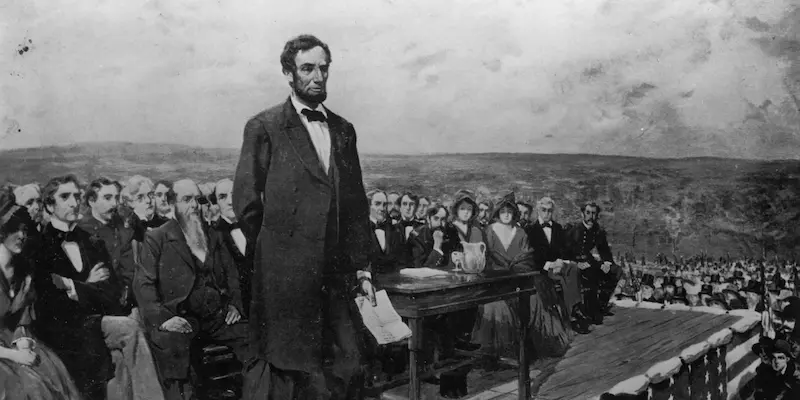
The Gettysburg Address is one of the most recognized political speeches in American history. President Abraham Lincoln delivered it during the American Civil War, several months after the Battle of Gettysburg, one of the war’s bloodiest and most significant battles.
Lincoln was invited to make remarks at a ceremony honoring the Union soldiers who had died fighting to preserve the United States. Although the occasion was a cemetery dedication, his message reached far beyond the battlefield. He connected the sacrifices of the soldiers to the founding ideals of equality and representative government.
Worthy Excerpt:
“Four score and seven years ago our fathers brought forth on this continent a new nation, conceived in liberty, and dedicated to the proposition that all men are created equal.”
“Now we are engaged in a great civil war, testing whether that nation, or any nation so conceived and so dedicated, can long endure.”
“We are met on a great battlefield of that war. We have come to dedicate a portion of that field as a final resting-place for those who here gave their lives that that nation might live.”
“The world will little note, nor long remember what we say here, but it can never forget what they did here.”
“It is rather for us to be here dedicated to the great task remaining before us—that from these honored dead we take increased devotion to that cause for which they gave the last full measure of devotion.”
Lincoln’s address is remarkable for its brevity. Rather than spending most of his time praising the ceremony, he asked the living to continue the work for which the soldiers had sacrificed their lives. His words transformed a memorial occasion into a call for renewed national commitment.
The address also connected the Civil War to the larger question of whether a nation founded on equality could survive. This made it more than a tribute to fallen soldiers; it became a statement about democracy and the responsibilities of future generations.
Why this speech matters: The Gettysburg Address remains an important example of concise, persuasive writing. It shows how a short speech can communicate grief, honor sacrifice, and express a national purpose in just a few paragraphs.
2. I Have a Dream by Martin Luther King Jr. (1963)
Speaker: Martin Luther King Jr.
Date: August 28, 1963
Occasion: March on Washington for Jobs and Freedom
Martin Luther King Jr. delivered his famous I Have a Dream speech in front of a large crowd gathered near the Lincoln Memorial in Washington, D.C. The event called for civil rights legislation, economic opportunity, and an end to racial discrimination in the United States.
At the time, Black Americans continued to face segregation, racial violence, and barriers to voting and employment. King used his address to argue that the promises of American democracy had not been fulfilled for everyone.
Worthy Excerpt:
“I have a dream that one day this nation will rise up and live out the true meaning of its creed: ‘We hold these truths to be self-evident, that all men are created equal.”
King’s vision was not limited to changes in legislation. He imagined a society in which people would be judged by their character rather than the color of their skin. He also called for a future in which children could grow up without being restricted by racial prejudice.
The speech drew strength from its use of repetition, familiar national ideals, religious imagery, and an optimistic vision of social change. Its repeated expression of hope gave the audience a memorable way to imagine a different future.
King also connected the civil rights struggle to America’s own founding promises. By doing so, he argued that racial equality was not a rejection of the country’s ideals but a demand that the country finally honor them.
Why this speech matters: I Have a Dream became a defining address of the American civil rights movement. It continues to be studied for its persuasive language and its message about racial justice, equality, and human dignity.
3. We Shall Fight on the Beaches by Winston Churchill (1940)
Speaker: Winston Churchill
Date: June 4, 1940
Occasion: Address to the British House of Commons during World War II
Winston Churchill delivered this speech at a critical point in World War II. Allied troops had been evacuated from Dunkirk, but the situation remained dangerous, and Britain faced the possibility of a German invasion.
Churchill needed to explain the military situation without destroying public confidence. He acknowledged the difficulties facing Britain while making clear that evacuation did not mean the country had abandoned the fight.
Worthy Excerpt:
Churchill’s speech builds toward a series of promises about continuing the struggle across different parts of the country. His repeated references to beaches, landing grounds, fields, streets, and hills create a sense that resistance would continue wherever necessary.
The best-known declaration from this passage is:
“We shall never surrender.”
The force of the statement comes from the determination surrounding it. Churchill did not suggest that victory would be easy or immediate. Instead, he presented continued resistance as a national commitment even if the country faced further military setbacks.
The repeated sentence structure also helped make the address memorable. Each new location reinforced the same central idea: Britain would continue defending itself rather than accept defeat.
Why this speech matters: The address is remembered as an example of wartime leadership and persuasive communication. It shows how a speaker can acknowledge danger while giving an audience a clear reason to remain determined.
4. Give Me Liberty or Give Me Death by Patrick Henry (1775)
Speaker: Patrick Henry
Date: March 23, 1775
Occasion: Second Virginia Convention
Patrick Henry delivered this celebrated address as tensions between Britain’s American colonies and the British government were approaching armed conflict. The colonies were debating how to respond to British policies, and Henry argued that the time had come to prepare for the possibility of war.
Rather than treating reconciliation as the only reasonable option, he questioned whether peace was worth preserving if it required accepting continued political subordination. He urged fellow delegates to recognize what he saw as a growing threat to their liberties.
Worthy Excerpt:
“Is life so dear, or peace so sweet, as to be purchased at the price of chains and slavery? Forbid it, Almighty God! I know not what course others may take; but as for me, give me liberty or give me death!”
Henry’s argument rests on a sharp contrast between freedom and submission. By asking whether life was worth living without liberty, he made the political dispute feel personal and urgent.
His closing declaration became the most famous part of the speech because it expressed his position in a few direct words. Instead of offering a complicated explanation, he presented liberty as a principle that deserved decisive action.
The speech is also associated with the wider debate about resistance, political rights, and the limits of government power. Its influence comes partly from its dramatic delivery and partly from the larger revolutionary movement in which it was remembered.
Why this speech matters: Patrick Henry’s address became a symbol of the American independence movement. It is often studied as an example of how rhetorical questions, contrasts, and a forceful conclusion can make an argument memorable.
5. Blood, Toil, Tears and Sweat by Winston Churchill (1940)
Speaker: Winston Churchill
Date: May 13, 1940
Occasion: Churchill’s first speech as British prime minister to the House of Commons
Churchill delivered this address just days after becoming prime minister. Germany’s military advance across Europe had placed Britain and its allies in a dangerous position, and Churchill needed to establish his approach to the crisis.
Instead of promising a quick victory, he acknowledged the scale of the challenge. His message was that the government would pursue the war with determination, even though the country would have to endure severe hardship.
Worthy Excerpt:
“I have nothing to offer but blood, toil, tears and sweat.”
The phrase is short, but it captures the seriousness of Churchill’s message. Each word communicates a different aspect of the sacrifice he believed the country would face: blood suggests loss, toil suggests sustained effort, and tears suggest grief.
Churchill’s language avoided easy reassurance. He wanted Parliament and the public to understand that defending Britain would require patience, unity, and a willingness to endure difficult circumstances.
This approach helped establish his public image as a leader prepared to speak frankly about the demands of war. Rather than hiding the risks, he made the challenge itself part of the argument for national commitment.
Why this speech matters: The address is remembered for its honesty and memorable phrasing. It demonstrates that effective leadership does not always involve promising success; sometimes it involves explaining the cost of pursuing a necessary goal.
6. Tryst with Destiny by Jawaharlal Nehru (1947)
Speaker: Jawaharlal Nehru
Date: August 14–15, 1947
Occasion: India’s independence and the transfer of power
Jawaharlal Nehru delivered Tryst with Destiny to India’s Constituent Assembly as the country approached independence from British colonial rule. After decades of political organizing, protests, and negotiations, India was preparing to become an independent nation.
The speech marked a historic beginning, but Nehru did not describe independence as the end of the country’s work. He spoke about the responsibility to serve India’s people, address poverty, and build a society in which freedom could have practical meaning.
Worthy Excerpt: Tryst with Destiny
“Long years ago we made a tryst with destiny, and now the time comes when we shall redeem our pledge, not wholly or in full measure, but very substantially.”
“At the stroke of the midnight hour, when the world sleeps, India will awake to life and freedom.”
“A moment comes, which comes but rarely in history, when we step out from the old to the new, when an age ends, and when the soul of a nation, long suppressed, finds utterance.”
“It is fitting that at this solemn moment we take the pledge of dedication to the service of India and her people and to the still larger cause of humanity.”
“The achievement we celebrate today is but a step, an opening of opportunity, to the greater triumphs and achievements that await us.”
These words capture both the celebration and the responsibility associated with independence. Nehru described freedom as a historic achievement while reminding the assembly that the country still had much to accomplish.
The speech also reflected the difficult circumstances surrounding independence. Partition had caused widespread suffering and displacement, and the joy of political freedom was accompanied by grief. Nehru acknowledged that the country’s happiness could not be complete while so many people were experiencing hardship.
Another important theme was public service. For Nehru, the purpose of an independent government was not simply to hold power but to improve the lives of ordinary people. He connected the future of India with efforts to reduce poverty, ignorance, disease, and inequality.
Why this speech matters: Tryst with Destiny remains one of the most important speeches in Indian history. It represents the transition from colonial rule to independence and offers a vision of national progress grounded in public responsibility.
7. The Solitude of Self by Elizabeth Cady Stanton (1892)
Speaker: Elizabeth Cady Stanton
Date: January 18, 1892
Occasion: Address to the United States House Committee on the Judiciary
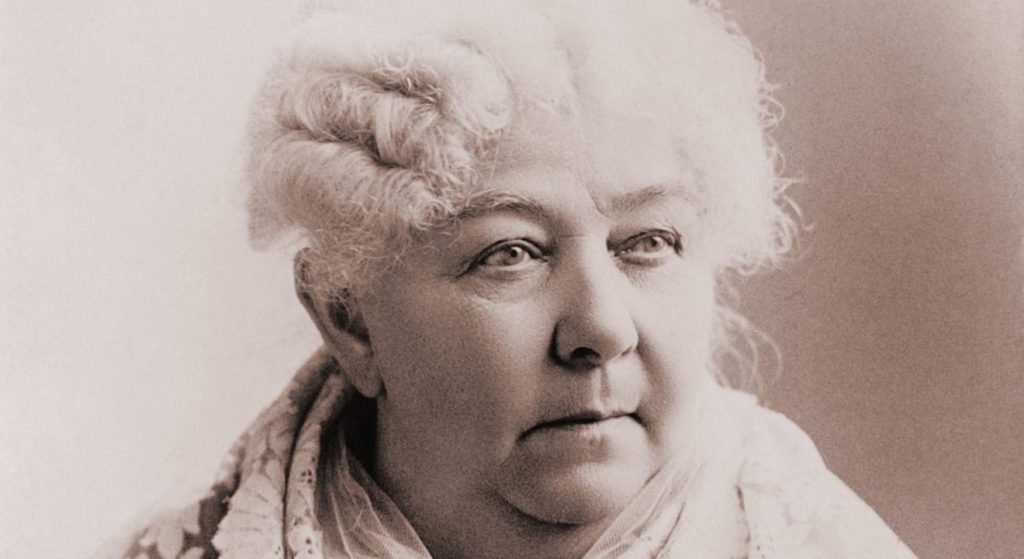
Elizabeth Cady Stanton was a leading figure in the American women’s rights movement. In The Solitude of Self, she argued that women deserved equal rights because each individual must ultimately face life’s responsibilities independently.
At the time, women encountered significant legal, educational, and political restrictions. Stanton challenged the assumption that women’s lives should be defined primarily by their relationships with men or their dependence on male relatives.
Worthy Excerpt: The Solitude of Self
“The strongest reason for giving woman all the opportunities for higher education, for the full development of her faculties, her forces of mind and body; for giving her the most enlarged freedom of thought and action; a complete emancipation from all forms of bondage, of custom, dependence, superstition, of all the crippling influences of fear—is the solitude and personal responsibility of her own individual life.”
Stanton’s argument was that independence was not simply a matter of personal preference. Every person eventually has to make decisions, face uncertainty, and take responsibility for their own life. Women therefore needed the same opportunities for education, personal development, and freedom as men.
The speech challenged traditional beliefs about women’s capabilities. Rather than arguing that women should receive rights only because they would make better wives or mothers, Stanton argued that they deserved freedom as individuals.
This distinction made her argument especially significant. It placed women’s rights within a broader discussion about human dignity, personal responsibility, and equal opportunity.
Why this speech matters: The Solitude of Self remains an influential text in the history of women’s rights. It provides a clear argument for educational equality and individual independence, making it relevant to discussions about gender equality today.
8. Inaugural Address by John F. Kennedy (1961)
Speaker: John F. Kennedy
Date: January 20, 1961
Occasion: Presidential inauguration
John F. Kennedy delivered his inaugural address after becoming the 35th president of the United States. The Cold War shaped the international situation, and tensions between the United States and the Soviet Union influenced political decisions around the world.
Kennedy’s speech addressed both domestic responsibility and international relations. He called on Americans to contribute to public life and encouraged countries to consider whether cooperation could reduce the risk of conflict.
Worthy Excerpt:
Kennedy offered a challenge that became one of the most recognized lines in American political history:
“Ask not what your country can do for you—ask what you can do for your country.”
The statement shifts attention from personal benefits to public responsibility. Kennedy encouraged citizens to think about the contribution they could make to their country rather than viewing government only as a source of services or protection.
The address also spoke to the responsibilities of powerful nations during a period of international tension. Kennedy argued for vigilance but also presented peace as an objective that required effort and cooperation.
His message appealed to a generation that was being asked to participate in a changing political world. The speech’s combination of idealism, responsibility, and national purpose helped define the public image of his presidency.
Why this speech matters: Kennedy’s inaugural address is remembered for its memorable language and call to civic service. It remains a popular choice for studying political rhetoric and the relationship between citizens and government.
9. Freedom or Death by Emmeline Pankhurst (1913)
Speaker: Emmeline Pankhurst
Date: November 13, 1913
Occasion: Speech in Hartford, Connecticut, during the women’s suffrage campaign
Emmeline Pankhurst was a leading British campaigner for women’s voting rights. Her Freedom or Death address explained why suffragettes were prepared to face arrest and punishment in their struggle to gain political representation.
Women in Britain were excluded from parliamentary voting on equal terms with men. Pankhurst argued that conventional methods had failed to secure meaningful progress and defended the urgency of the suffrage campaign.
Worthy Excerpt:
“We are here, not because we are law-breakers; we are here in our efforts to become law-makers.”
This statement challenges the distinction between breaking an existing law and having a voice in making laws. Pankhurst argued that women were being denied the political rights necessary to influence decisions that affected their lives.
Her address also described the personal sacrifices made by activists. Arrests, imprisonment, public criticism, and conflict with authorities were part of the wider campaign. Pankhurst used these experiences to explain why the suffrage movement could not simply be dismissed as a minor disagreement.
The speech reflected a period when women around the world were challenging legal and political restrictions. Although the methods and strategies of suffrage organizations differed, their campaigns helped make women’s political exclusion an increasingly urgent public issue.
Why this speech matters: Pankhurst’s address provides insight into the determination of the women’s suffrage movement. It illustrates how activists used public speaking to defend their actions and demand a greater role in political life.
10. I Am Prepared to Die by Nelson Mandela (1964)
Speaker: Nelson Mandela
Date: April 20, 1964
Occasion: Statement from the dock during the Rivonia Trial
Nelson Mandela delivered this statement during his trial in South Africa, where the apartheid system enforced racial segregation and denied the Black majority equal political rights. Mandela and other anti-apartheid activists faced serious charges related to their opposition to the government.
Rather than treating the trial only as a legal defense, Mandela used his statement to explain the principles behind his political struggle. He described his opposition to racial domination and his hope for a democratic society in which people of different races could live together as equals.
Worthy Excerpt:
Mandela concluded his statement by expressing his commitment to the ideal of a free and democratic society:
“It is an ideal for which I am prepared to die.”
The words were powerful because they were delivered in a setting where Mandela faced the possibility of a severe sentence. His statement explained that his political convictions were not simply a matter of personal advantage. He believed that racial equality and democratic government were principles worth defending despite the risks.
The address also distinguished opposition to apartheid from hatred of a particular racial group. Mandela presented his goal as a society in which all people could participate and live with equal rights.
His words later became closely associated with the international struggle against apartheid and the broader demand for human rights.
Why this speech matters: Mandela’s statement is remembered as a major address in the history of anti-apartheid resistance. It shows how a courtroom statement can become a wider declaration of political ideals and personal conviction.
11. Quit India Movement Speech by Mahatma Gandhi (1942)
Speaker: Mahatma Gandhi
Date: August 8, 1942
Occasion: All-India Congress Committee meeting in Bombay
Mahatma Gandhi delivered his Quit India address during World War II, when India remained under British colonial rule. Gandhi and the Indian National Congress argued that Britain should end its rule and allow Indians to determine their own political future.
The speech called for determined action, but Gandhi continued to emphasize the importance of nonviolence. His approach was rooted in the belief that resistance could challenge an unjust system without adopting the same methods of coercion.
Worthy Excerpt:
Gandhi’s message was condensed into two memorable words:
“Do or Die.”
The phrase expressed the urgency of the independence struggle. It was a call for people to dedicate themselves to freedom rather than accept indefinite colonial rule.
Gandhi’s appeal was not simply a demand for political change. He also wanted the movement to remain grounded in discipline and nonviolent action. This distinction was important because the Quit India Movement unfolded during a period of intense political tension and wartime uncertainty.
Following the launch of the movement, British authorities arrested Gandhi and many other Congress leaders. Protests and demonstrations spread, and the government responded with widespread repression.
Why this speech matters: The Quit India address became a landmark in India’s independence movement. It helped communicate the determination behind the demand to end British rule and remains an important part of the country’s history.
12. Nobel Peace Prize Lecture by Malala Yousafzai (2014)
Speaker: Malala Yousafzai
Date: December 10, 2014
Occasion: Nobel Peace Prize ceremony in Oslo, Norway
Malala Yousafzai became internationally known for advocating girls’ education in Pakistan. After surviving an assassination attempt by the Taliban in 2012, she continued speaking publicly about the right of every child to receive an education.
She received the Nobel Peace Prize in 2014, sharing the award with children’s rights activist Kailash Satyarthi. In her lecture and wider advocacy, Malala emphasized that education could help children gain opportunities and build a more peaceful future.
Worthy Excerpt:
A widely recognized line associated with Malala’s education advocacy is:
“One child, one teacher, one book, one pen can change the world.”
The statement emphasizes that education does not always require grand gestures to make a difference. A teacher, a book, or an opportunity to learn can help a child develop knowledge and confidence, opening doors that might otherwise remain closed.
Malala’s advocacy also draws attention to the barriers that prevent children from attending school. Poverty, conflict, discrimination, and restrictions on girls’ rights can all limit access to education.
Her message places responsibility on governments, communities, and individuals to make learning accessible. It also reminds audiences that education is not merely a personal benefit; it can contribute to stronger communities and more informed societies.
Why this speech matters: Malala’s advocacy has helped bring international attention to the right to education, particularly for girls. Her message continues to resonate with educators, students, and campaigners working to expand educational opportunities.
13. What to the Slave Is the Fourth of July? by Frederick Douglass (1852)
Speaker: Frederick Douglass
Date: July 5, 1852
Occasion: Independence Day address in Rochester, New York
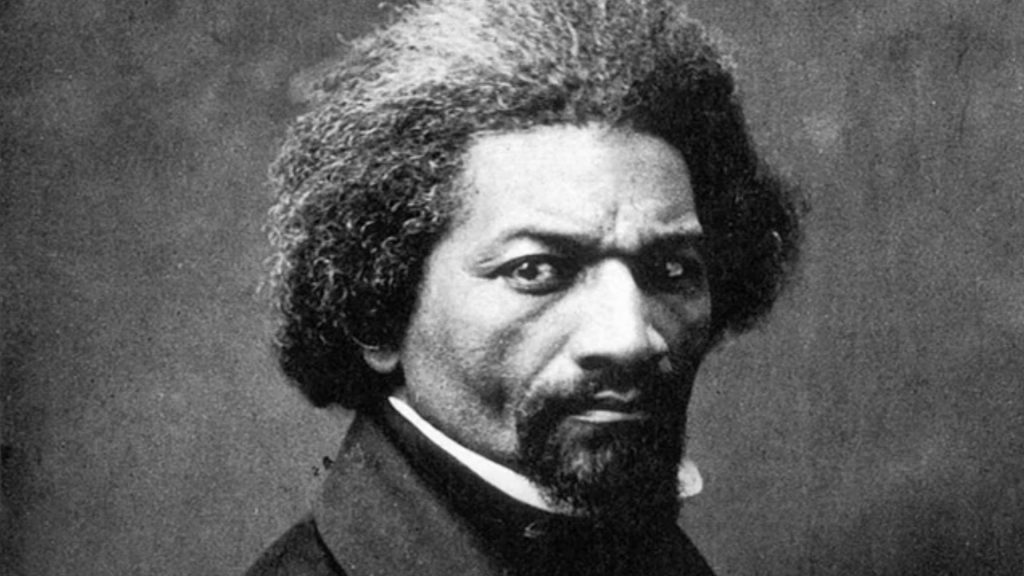
Frederick Douglass was a formerly enslaved man who became one of America’s most influential abolitionists, writers, and public speakers. He delivered this address at a time when slavery remained legal in much of the United States and the nation was deeply divided over its future.
Douglass had been invited to speak during an Independence Day celebration. Instead of simply praising the country’s founding, he questioned the meaning of a freedom celebration in a nation where millions of people remained enslaved.
Worthy Excerpt:
“Fellow citizens, pardon me, allow me to ask, why am I called upon to speak here to-day?”
Douglass began by acknowledging the importance of American independence before challenging the audience to consider who had actually benefited from its promises.
He made the contradiction particularly clear when he stated:
“This Fourth of July is yours, not mine. You may rejoice, I must mourn.”
The contrast between celebration and mourning was central to his argument. The country praised liberty while continuing to deny freedom to enslaved people. Douglass argued that this contradiction could not be ignored simply because the occasion was patriotic.
His speech also challenged the audience’s moral responsibility. Rather than treating slavery as a distant political problem, he forced listeners to consider the human consequences of a system that denied people control over their own lives.
The address remains important because it combines historical analysis, moral criticism, and powerful rhetorical questions. Douglass used the occasion to demand that the country confront the gap between its ideals and its practices.
Why this speech matters: What to the Slave Is the Fourth of July? is one of the most influential abolitionist speeches in American history. It remains a powerful example of how public speaking can expose injustice and challenge a society to reconsider its values.
Lessons We Can Learn from Famous Historical Speeches
Historical speeches are valuable not only because they help us understand the past but also because they offer lessons about communication, leadership, and social responsibility.
1. Stand Up for What You Believe In
Patrick Henry, Emmeline Pankhurst, and Nelson Mandela spoke out against political conditions they believed were unjust. Their examples demonstrate the importance of explaining your beliefs clearly, especially when doing so may bring criticism or personal risk.
Standing up for a principle does not mean ignoring opposing views. It means understanding what you believe, explaining why it matters, and being prepared to defend your position with reason and conviction.
2. Use Words to Challenge Injustice
Frederick Douglass and Martin Luther King Jr. used public speaking to challenge racial inequality. Their speeches show that words can draw attention to problems that powerful institutions or sections of society would rather overlook.
Effective communication can help people recognize injustice, understand its consequences, and consider how conditions might change. It is one reason public speaking remains important in movements for civil rights and equality.
3. Be Honest About Difficult Challenges
Churchill’s wartime speeches did not promise that victory would come without sacrifice. His language acknowledged the seriousness of the situation and asked people to prepare for sustained effort.
Leaders earn trust when they communicate challenges honestly. False reassurance may be comforting in the short term, but a realistic explanation can help people prepare and work together.
4. Connect Ambition With Responsibility
Nehru’s Tryst with Destiny celebrated independence while emphasizing the responsibility to serve India’s people. The speech reminds us that reaching an important goal is often the beginning of another stage of work.
The same lesson applies to personal and professional life. Achievements become more meaningful when people consider how they can use their opportunities to help others and improve their communities.
5. Recognize the Importance of Education
Malala Yousafzai’s advocacy highlights education as a means of expanding opportunities and reducing barriers. Access to education can help people develop skills, understand their rights, and participate more fully in society.
Her message is especially relevant in places where children face barriers because of poverty, conflict, or discrimination. Education is not simply a path to employment; it also helps people make informed decisions and contribute to their communities.
6. Remember That Progress Requires Action
Lincoln’s address asked the living to continue the work for which soldiers had sacrificed their lives. Stanton argued that women needed genuine opportunities to develop their abilities and exercise independence.
Both speeches connect ideals with action. Equality, freedom, and democracy cannot be maintained through words alone. They depend on decisions, institutions, and the efforts of people willing to work toward those goals.
Wrapping Up
The most influential speeches in history reveal how people have responded to war, inequality, political change, and the struggle for freedom. From Abraham Lincoln’s call to preserve democratic ideals to Jawaharlal Nehru’s vision for independent India, these addresses reflect the hopes and responsibilities of their times.
They also demonstrate that powerful public speaking is not simply about choosing impressive words. A memorable speech gives people a way to understand an issue, connect with a cause, or imagine a different future. Its impact depends on the message, the historical circumstances, and the actions that follow.
Exploring famous speeches in history allows readers to discover the original arguments behind important historical events. By reading reliable transcripts and examining each speech in context, we can better understand how leaders and activists communicated their ideas—and why some of their words continue to matter today.